FOOTBALL CLUB NICKNAMES
- strie4

- May 4
- 8 min read

In the final comment of my last blog about football club names, I asked the question why Sheffield Wednesday, the last club on my list, were known as The Owls. Almost by return, a friend of mine replied that it was because the club originally played in the Owlerton district of Sheffield. That set my mind racing. What about all the other professional football clubs with odd names? Some research was called for….
At once, I should like to discount two categories: those that simply employ an obvious diminutive of their name (Spurs for Tottenham Hotspur or Hammers for West Ham United) or use their colours as a nickname (Reds for Liverpool or Blues for Chelsea – though Birmingham City were the original Blues and do not take kindly to having their moniker highjacked). I am more interested in the unusual eponym, for closer investigation invariably yields intriguing historical and geographical provenance. Many of English football clubs were founded in the second half of the 19th century, when the world was a very different place. These nicknames that have endured down the years provide a window into a time when football, hitherto an activity largely confined to the public schools, each with their own set of rules, spread throughout the industrial workplace, with clubs set up for the benefit of the workers who began to have more leisure time. Football was seen as a manly and healthy outdoor pastime. Often the clubs, and their nicknames, reflect their industrial roots. Others may simply appear whimsical, but no less beguiling for that.
The Addicks: Charlton Athletic. The name is widely believed to be a south London dialect of ‘haddock’, referring to the usual fish and chips meal provided post-match by a local fishmonger and early sponsor.

The Addicks
The Ammies: Salford City. Originally the club was known as Salford Amateurs, so ‘Ammies’ is a corruption of ‘Amateurs’. When the club turned professional, they kept the nickname.
The Baggies: West Bromwich Albion. This was the one that first piqued my interest. I have been going along to watch them for many years now. The Hawthornes, where they play, is the highest ground in English professional football at 550 feet above sea level. Not a lot of people know that. The supporters break out at jubilant moments to sing the hymn The Lord Is My Shepherd. Why? Allegedly there was some criticism of the fans singing ribald ditties about their opponents, so, with a typical Black Country sense of irony, they sang a hymn instead. Now, why The Baggies? In the early days, the turnstile operators used to walk around the perimeter of the pitch carrying large cloth bags containing the gate receipts, prompting the cry, “Here come the Baggies!”

The BAGGIES
Bantams: Bradford City. The club colours, amber and claret, resemble the plumage of a bantam (apparently), a small but fighting bird, qualities that the fans wish that their team embody.
The Bees: Brentford FC. A group of students from nearby Borough Road College had come to a match to support one of their friends who was playing for the club. They shouted the usual chant for their college, “Buck up Bs”, but it was misheard by the rest of the crowd who took it up as “Buck up, the Bees”, and the name stuck.
The Black Cats: Sunderland. Historically the name is associated with the Black Cat Gun Battery, situated nearby on the River Wear.
Blades: Sheffield United. The name directly reflects Sheffield’s worldwide reputation for steel production and its industrial heritage in manufacturing cutlery.
The Bluebirds: Cardiff. Traditionally reflecting their change of colours from amber and brown to blue and white at the same time a popular play, The Blue Birds of Happiness, was first staged in the city.
The Brewers: Burton Albion. The town Burton upon Trent is renowned for its brewing heritage.
The Canaries: Norwich City. Norwich has a history of breeding canaries, introduced by Dutch settlers in the 16th century.
The Chairboys: Wycombe Wanderers. The town of High Wycombe is historically associated with the furniture manufacturing industry, and the club was founded by furniture workers.

The Cherries: Bournemouth. Quite possibly a reference to their cherry red and black striped kit but equal provenance is given to the fact that cherry orchards fringed their original stadium in Dean Court.
The Clarets: Burnley. No nothing to do with their post-match tipple of choice but simply on account of their claret and blue shirts.
The Cobblers: Northampton Town. Recent form might well have elicited groans of ‘cobblers’ but of course the name is a nod to the town’s historical importance in shoe making.
The Cod Army: Fleetwood Town. The name reflects the fishing heritage of this coastal Lancashire town.
The Colliers: Barnsley. The town is noted for its coal mining heritage.
The Cottagers: Fulham. The name is directly derived from their historic home ground, Craven Cottage.

Craven Cottage
The Eagles: Crystal Palace. The club’s original nickname was The Glaziers, stemming from its association with the great glass palace after which it was named. In 1973, the manager Malcolm Allison changed the colours to red and blue and changed the mascot to an eagle in an attempt to rebrand the team.
The Exiles: Newport County. This nickname was adopted when the club was forced to play home matches away from their stadium after the club went out of business in 1988. The club was reformed and finally moved to Rodney Parade 2012.
The Foxes: Leicester City. The nickname owes its origin to the region’s historical association as the birthplace of fox hunting. The team wears the emblem of a fox on their shirts, as do Leicestershire CCC incidentally.
The Grecians: Exeter City. The nickname derived from the tradition of calling people from the St Sidwell’s area of the city – where the club was based and played – as Greeks or Grecians, i.e. outside the city walls.
The Gunners: Arsenal. The club was founded by munitions workers at the Royal Arsenal in Woolwich and was originally known as Woolwich Arsenal. The term’ Gooners’ is a playful derivative of ‘Gunners’. This would explain the cannon that is depicted on the team’s shirts.

The Gunners
The Hatters: Luton Town. This is a nod to the town’s historical and illustrious hat making industry.

The Hatters
The Hoops: Queen’s Park Rangers. This refers to the blue and white hoops of the team’s shirts in much the same way that Celtic are often referred to a ‘The Hoops’ on account of the green and white hoops of their shirts.
The Hornets: Watford. The nickname was adopted in 1959 when the club changed its colours to black and gold.
The Latics: Wigan Athletic. Simply an abbreviation of the word ‘athletic’.
The Magpies: Newcastle United. The name derives from the black and white striped kit, matching the plumage of the bird.
The Mariners: Grimsby Town. The nickname stems from the town’s historic association with fishing and the sea.
The Millers: Rotherham United. The name stems from the town’s historic milling industry.
The Owls: Sheffield United. As my friend pointed out, the club first played in the Owlerton district of the city.
The Pilgrims: Plymouth Argyle. In 1620, the Pilgrim Fathers set sail from Plymouth for the New World in their ship ‘Mayflower’.

The Pilgrims
The Pirates: Bristol Rovers. The name reflects the maritime history of the city.
Pompey: Portsmouth. The origin of the name is not certain, but it is believed that sailors used the abbreviation ‘Pom.P’ for Portsmouth Point in maritime logbooks.
Posh: Peterborough United. Allegedly an earlier manager of the club put it about that he was on the lookout for “posh players” to form a “posh team”. The word ‘posh’ had nothing to do with public schoolboys but was simply a synonym for ‘good’.

The Posh
The Potters: Stoke City. An obvious reference to the area, known as The Potteries, which is the heart of the country’s ceramic industry.
The Railwaymen: Crewe Alexandra. The name reflects the town of Crewe’s historic and strong association with the railway industry.
The Rams: Derby County. The name honours the team’s historical links with the First Regiment of the Derby Militia, which adopted a ram as its mascot in 1855.
The Ravens; Bromley. The choice of a bird as their nickname celebrates the club’s rise to the Football League. They might not be so keen on the association if they had paid heed to the mythological status of the raven as a messenger between life and death. Ravens are carrion birds and are always seen circling over battlefields.
The Red Devils: Manchester United. The name was popularised by Matt Busby in the 1960s, to project an intimidating image. Apparently, he was inspired by the local rugby league team, Salford Red Devils, who on a tour of France in the 1930s had been called Les Diables Rouges by the French press
The Red Dragons: Wrexham. No, not ‘Hollywood’, though that seems to be gaining traction. The name and the crest are closely associated with Welsh nationalism.
The Riversiders: Blackburn Rovers. Geographical origin here – their ground, Ewood Park, is situated near the River Darwen.
The Saddlers: Walsall. The name derives from the town’s historical reputation as a renowned centre for the leather industry and saddle making craftmanship.
The Saints: Southampton. The name originates from the club’s founding in 1885 at St Mary’s Church of England Young Men’s Association at St Mary’s Church in Southampton. They used to play at The Dell, but their new stadium is built in the St Mary’s district and is called St Mary’s.
The Seagulls: Brighton and Hove Albion. The nickname was spontaneously adopted by supporters in the 1970s as a direct response to Crystal Palace fans chanting “Eagles”.
The Seasiders: Blackpool. This is an obvious reference to their location by the sea.
The Smoggies: Middlesbrough. The name is derived from the industrial smoggy nature of the area, first used as derision by visiting fans but adopted as their own by local fans.

The Spireites: Chesterfield. I know this because the famous crooked spire of the Church of St Mary’s and All Saints in the city, a landmark for over 650 years, is clearly visible from the cricket ground.

The Stags: Mansfield Town. The town’s proximity to Sherwood Forest, where deer have been historically hunted, accounts for this nickname.
The Sulphurites: Harrogate Town. The name derives from the history of the town as a spa, famous for its sulphur wells and waters.
The Tigers: Hull City. This derives from their traditional black and amber kit, resembling the markings of a tiger.
The Toffees: Everton. This comes from the toffee shops near the old ground at Goodison Park.

The Tractor Boys: Ipswich Town. The nickname is a self-deprecating nod to the club’s agricultural Suffolk roots.
The Trotters: Bolton Wanderers. The nickname is believed to have originated from a popular local dish in Bolton – boiled sheep’s feet, known as trotters – which was served to visitors.
The Vikings: Doncaster Rovers. The nickname originates from an old sponsorship deal with the Rover Car Company, which sported a Viking helmet as its mascot.
Finally, a historical oddity about football colours. Why do Blackburn Rovers wear blue and white halves for their shirts (originally called ‘quarters’ because obviously there are two more halves on the back)? The club was originally founded by former pupils of Malvern College. The school football team wore green and white halves (quarters) with a Maltese Cross as a badge. The Old Malvernians adopted the same design for their new club but changed the colours from green and white to blue and white, but kept the Maltese Cross. Subsequently, both teams, Blackburn Rovers and Malvern College, dropped the Maltese Cross, but the design remains.
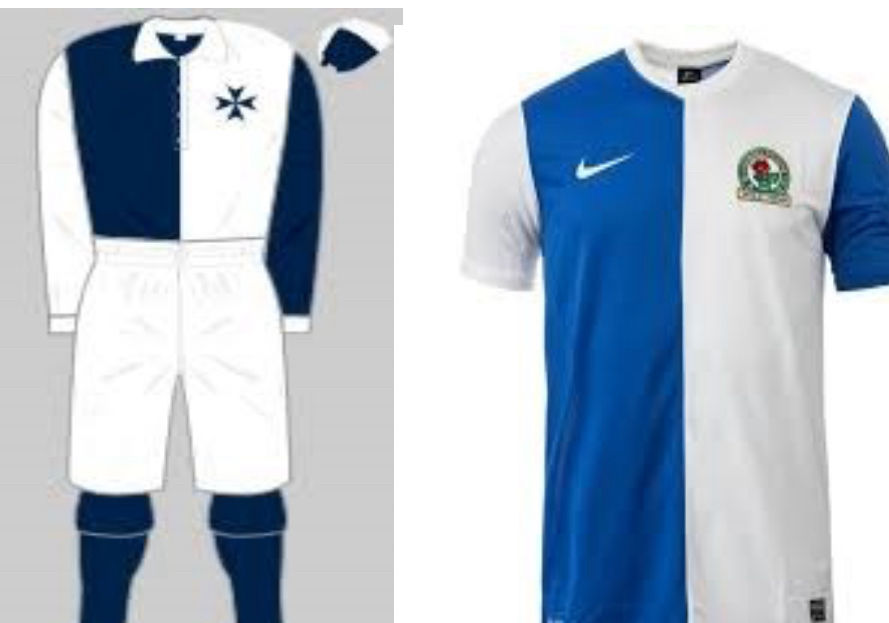
Blackburn Rovers strip, original and modern
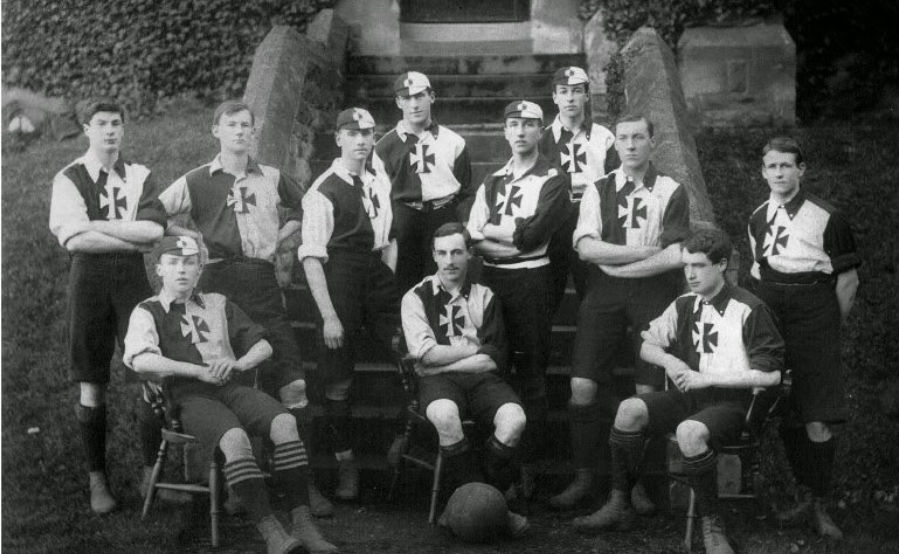
Malvern College football team 1900


Comments