CHRONIC INEFFICIENCY

The A449 Wells Road between Malvern and Ledbury (near where we live) has been closed for over a year now. Initially the closure, to repair the road, was scheduled to last only six months but that date has been repeatedly set back owing to “an unexpected landslip”. Whether the landslip was occasioned by the actual work being carried out nobody is saying. It certainly wasn’t brought about by flash flooding! In the meantime, the sleepy village of Colwall has had to put up with convoys of heavy lorries and streams of redirected traffic, which has done nothing for the already parlous state of the tarmac on the road. Chausse deforme is an understatement.

The interminable roadworks on the Malvern to Ledbury Road.
Have chronic overrun and severe scheduling failures always been a feature of major British construction or was there a time in our history when British engineering, building and infrastructure were the envy of the world? Say what you like about the Victorians, but they knew how to get things done, often on a vast and industrialised scale. Brunel had built his London to Bristol railway line in the time it took for the ill-fated HS2 to lay its first yard of track.
By way of further illustration of how the expectations of major building projects have suffered a decline, let me tell you the story of the Dreadnought. HMS Dreadnought, built in Portsmouth and commissioned in 1906, overnight revolutionised naval power and at a stroke rendered obsolete all other battleships afloat (there were 50 capital ships in the Royal Navy alone).

HMS Dreadnought
The genesis of the Dreadnought lay in the determination in the late 1890s of the German Kaiser Wilhelm II (a grandson of Queen Victoria incidentally) to pursue a foreign policy of world domination, an aspiration that could only be fulfilled by rivalling the hegemony of the Royal Navy, whose domination of the seas had remained unchallenged since Nelson’s victory at the Battle of Trafalgar in 1805. This fundamental shift in the balance of power in the great nations of Europe was regarded - unsurprisingly - with the gravest misgiving in Britain by the admirals and the politicians, to say nothing of the Great British Public. The cornerstone of naval strategy that had endured for many years held that the strength of the Royal Navy should remain as powerful, or more powerful, than the combined naval forces of any other two countries. The build-up of Germany’s navy was too much to stomach. Something must be done, was the cry.
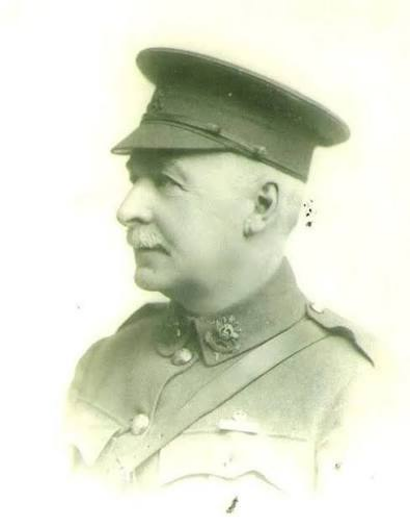
Nobody saw the danger more acutely than the First Sea Lord, the charismatic Admiral John Fisher (Jackie to his friends, of whom there were plenty, including the future First Sea Lord, Winston Churchill). Fisher had been promoted to that role specifically to bring his organising genius to the reform and modernisation of the Royal Navy in preparation for modern warfare. He had predicted in 1908 that war with Germany was inevitable and that it would break out in October 1914 (he was spot-on there) so he set about with zeal, flair and energy to overhaul the Navy’s preparedness for war. It was sorely needed. Most of the Navy’s ships he declared were “too weak to fight and too slow to run away.” He was the driving force behind the development and construction of fast, big, all-gun battleships, the first of which was HMS Dreadnought.

Admiral Jackie Fisher, First Sea Lord
The Royal Navy has always held a special place in the affection of the Great British Public. Alarmed at Germany’s growing naval power, a famous slogan was loudly voiced when this behemoth was first launched: We want eight and we won’t wait. Accordingly, eight new Dreadnoughts were built in short order.
Astonishingly, the first Dreadnought was built in one year and a day, a testament to Fisher’s drive and forceful personality as well as the skill, workmanship and undivided loyalty of the ship-building workforce. By contrast, the latest and newest aircraft carrier in the Royal Navy, HMS Prince of Wales, commissioned in 2019, took six and a half years to build. Furthermore, it has been beset by teething problems since its maiden voyage, including flooding, electrical malfunctions and mechanical failures, necessitating several returns to port for repairs. Significantly, HMS Dreadnought suffered no such problems in her career as the flagship of the Home Fleet until her retirement in 1920.
Everybody has his own favourite bete noire of egregious gross inefficiency in large organisations. I have already mentioned mine – HS2. This must rank as the biggest white elephant of our times. HS2 (High Speed 2; High Speed 1 is the link between London and the Channel Tunnel) was meant to be a high-speed railway linking London to Birmingham and then splitting into a Y going on to Manchester and Leeds. The Manchester and Leeds links have been abandoned and the London to Birmingham route has been beset by delays, poor planning, underestimation of budget, political interference and bad governance. Rising costs have spiralled from the initial £35 billion to over £100 billion. It has been 15 years since the idea of building a high-speed railway up the west coast of England was first announced. When will it be finished? Nobody can say. How much will it cost? Nobody seems to know. The journey time from London to Birmingham on a conventional train takes 1 hour 46 minutes. On the new high-speed train, the journey will take 45 minutes, a saving of roughly half-an-hour. Is that worth spending over £100 billion? The Public Accounts Committee describe HS2 as a casebook study in how not to run a major project. It’s enough to make Isambard Kingdom Brunel turn in his grave.

Work on the ill-fated HS2
I recently had cause to visit London and travel on the new Elizabeth Line. Very modern and spick and span it is too, but at what cost, and late in opening too. Under the construction name of Crossrail, the east-west railway through London was 20 years in the planning, it took four-and-a-half more years to build than was first scheduled and came in at £4 billion pounds over budget. Notwithstanding the problems that beset the building of the line (not the least was the effect of the COVID pandemic), Londoners seem pretty happy with the finished project. It has to be said the Elizabeth Line is a technical feat of complex engineering. Was it a project failure? In terms of time and cost, yes. In terms of scope, quality and long-term value, probably no.
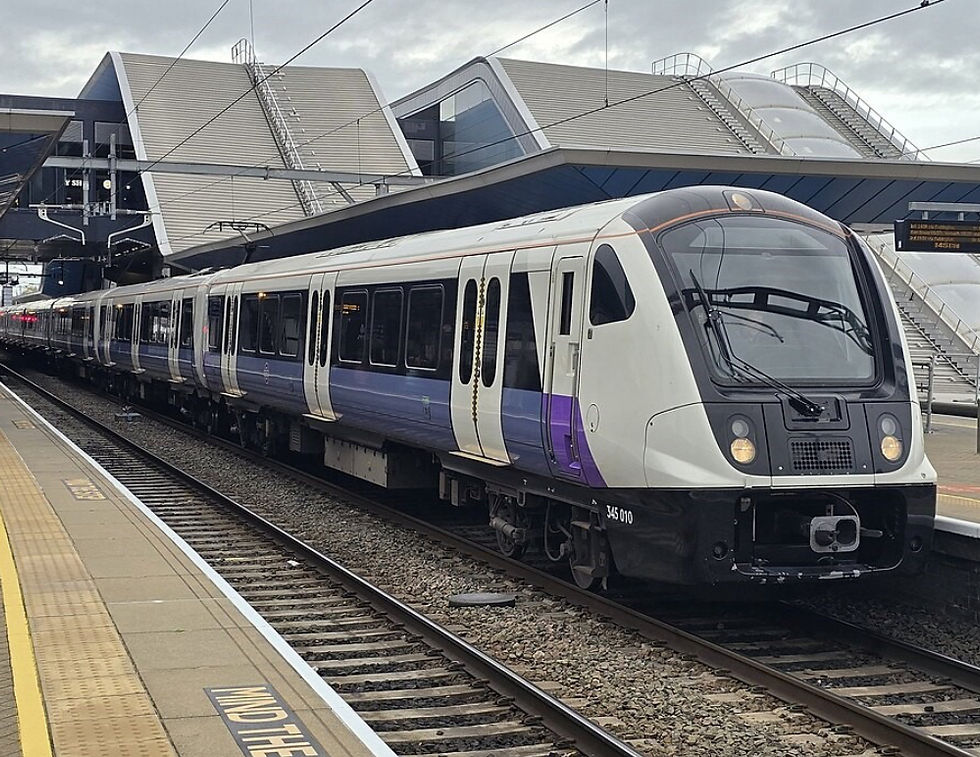
The new Elizabeth Line (or Lizzie Line to Londoners).
In June 2017, the Grenfell Tower fire killed 72 people. Fire had broken out in the kitchen of a 4th floor flat in the 23-storey tower block in North Kensington in west London. Rapidly, the conflagration spread upwards, fuelled by the cladding made of highly flammable material that had been installed in a refurbishment programme only the previous year. An official inquiry after the tragedy confirmed that many thousands of buildings have similar cladding but only a fraction of that number have been identified for remedial work and not many have actually had the work completed. Thus, residents of these buildings still covered in the dangerous cladding live in constant fear that a similar fire that broke out in Grenfell Tower might happen to them. It was only last year that work was finally started to demolish Grenfell Tower. The reasons for the delay in making these buildings safe are many and complex but no less excusable for all that.

The Grenfell Tower fire of 2017
In 1834, the mediaeval Houses of Parliament caught fire, a spectacular conflagration captured on canvas by the celebrated artist JWW Turner. Both the House of Commons and the House of Lords were razed to the ground, though the ancient Westminster Hall was only saved by the heroic efforts of the firefighters. Construction of the new Palace of Westminster was started in 1840, to be rebuilt in the Gothic Revival style of Charles Barry and Augustus Pugin, with the House of Lords opening in 1847 and the House of Commons in 1852.

Turmer’s famous painting of the fire at the Palace of Westminster in 1834.
However, today the parliamentary building is facing severe structural decay, leaking pipes, electrical malfunctions and increased risk of fire. The problems have been known for years but the refurbishment plan has been kicked down the road by successive governments. Political indecision, massive projected costs (up to £40 billion) and inconclusive debates about how, where and when the MPs should relocate have been rumbling on with no sign of any firm conclusion. Some estimates are that the project could take up to 60 years to complete. In the meantime, our rulers sit on their hands while the edifice of government crumbles around their heads, costing £1.5 million a week to maintain. The contrast is sharp and inescapable; the Victorians were not so fainthearted and indolent when rebuilding the Palace of Westminster after that catastrophic fire.

The iconic Palace of Westminster, rebuilt in 1840-52, is now falling apart.
I could go on. In the meantime, there is still no official word from Worcestershire County Council when the Malvern to Ledbury Road (A449) will be reopening. “Any timescale will depend on the solution chosen from the investigation report and the extent of the works required,” said a council spokesman. Weasel words.
In the time that the council have been faffing about, Jackie Fisher would have already built his Dreadnought.


Comments