TARMAC

THE STORY OF THE MAN WHO INVENTED TARMAC, SHAMEFULLY NEGLECTED BY HISTORY.
Pat Hooley introduced me to ski-ing. He was a Classics Master at Malvern College and ran the school ski-ing trips. One day, not long after I had arrived at the College, he sidled up to me and asked whether I would like to join the ‘team’ supervising the boys on their annual trip to the Alps. Hesitantly, I accepted. As an aficionado of the weekly show on television, Ski Sunday, with that instantly recognisable theme music (based on a tune by Bach), I had always fancied myself hurtling down a mountain like those downhill racers – but I had never been, never learned. And I was now in my early 30s. The reality when I first hit the pistes was that I found the skill fiendishly difficult to master and it took me a long time to remain upright – so I swallowed by doubts, went along, struggled, persevered (I’m glad I did) and prospered.
Pat Hooley was a tall, lean, lugubrious figure, with a pipe firmly clenched in his jaw, who ski-ed in the old-fashioned, elegant, upright style, rather than in the crouched, low centre-of-gravity style favoured by modern practitioners. He was good value in many an apres-ski session in the local bars, with a fund of amusing stories of both former ski-ing trips and College life. I shall always remember a comical conversation he had with a Greek barman. Being a Classics teacher, he fancied he could make himself understood speaking Greek. The trouble was, he was conversing in Ancient Greek, while the barman spoke a totally different language, modern Greek. The exchanges became increasingly surreal as Calvados after Calvados slipped down. He introduced me to that iconic Normandy spirit. “Press the starter button in the morning…nothing happens,” he said, “But Calvados is like the choke you pull out when starting an engine. It springs into life.”

An uncomfortable journey before the advent of tarmac and the inflatable rubber tyre.
On another occasion, he told me another story that frankly I found improbable, that is until I later checked on his facts and found them to be entirely accurate. “One of my forebears invented tarmac,” he announced, apropos of nothing. I cast my companion a quizzical eye. How many beers had the old boy had? He seemed reasonably sober, perched soundly on his bar stool. “One day on his way home, he noticed a barrel of tar had fallen off a passing cart, spilling its contents over the road, which in those days before the motor car, was rutted and dusty. The road had become immediately smoother, the ruts and dust having disappeared. He patented the discovery and named it Tarmac.” I was dumbstruck, not at all sure whether to believe him, so I ordered a couple of Calvados and the conversation moved on to the day’s adventures on the slopes, of which there had been many.
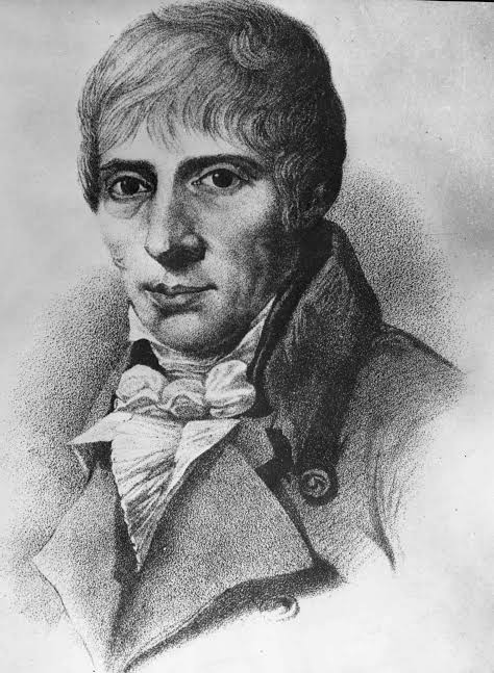
John Loudon McAdam

Roads were like this before the advent of tarmac.
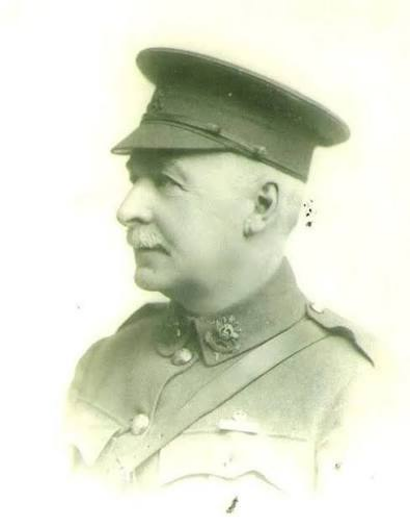
But the claim remained in my mind and on our return to old Blighty, I did a bit of research. Macadam, named after a pioneering Scottish road builder, John Loudon McAdam, is a form of crushed stone widely used in the construction of roads in the 19th century. It was in 1901 that Edward Purnell Hooley, a county surveyor for Nottinghamshire County Council, noticed a smooth stretch of road while walking in the town of Denby in Derbyshire. On investigation, he was informed that a barrel of tar had fallen off a cart and smashed, spilling its contents over the road and someone had tried to clear up the mess by dumping gravel on top of it. Hooley noticed that the unintentional resurfacing had solidified the road and removed all rutting and dust. If the mixture was compacted by a steamroller, a perfect surface for the new motor car was formed. An idea had taken hold. In 1902, he patented the concept under the name of The Tar Macadam Syndicate Limited, with Tarmac as a registered trademark.

Laying tarmac before the First World War.
Regrettably, Hooley was not much of a businessman, which would have come as no surprise to his academic descendant, and he had trouble selling his product. He was forced to sell the company to Wolverhampton MP, Sir Alfred Hickman, in 1905. Hickman relaunched the Tarmac Company in 1905, which was an immediate success and remains a major company to this day. Hooley undertook some military service in the 1st Nottinghamshire Battalion and latterly in the Sherwood Foresters. He retired from the Army in 1920 and died at his home in Oxford in 1942.
Motorists the world over owe Hooley a huge debt. Yet his name has gone largely unsung in the history of road building. Happily, efforts have been made in recent years to rectify that oversight. Radcliffe Road in Nottingham became the first tarmac road in the world. A five-mile stretch was given the tarmac treatment and proved itself by being long-lasting, smooth and dust and mud free.

Radcliffe Road Stand at Trent Bridge.
Radcliffe Road? Now where have I heard that name before? Of course… on many a Test Match Special broadcast from Trent Bridge in Nottingham. There is the Pavilion End and there is the Radcliffe Road End, favoured by, among others, Harold Larwood, and in more recent years, Richard Hadlee. Surely not the same Radcliffe Road? Oh yes, it is and in recognition of Hooley’s connection with the road, a blue plaque in his honour was unveiled in 2021 on the wall of the Radcliffe Road Stand. “It’s great to think that over 100 years ago, Edgar Hooley would have smoothed the way to and from Trent Bridge,” were the equally smooth words of Nottinghamshire CCC commercial director, Michael Temple, on the occasion of its unveiling.

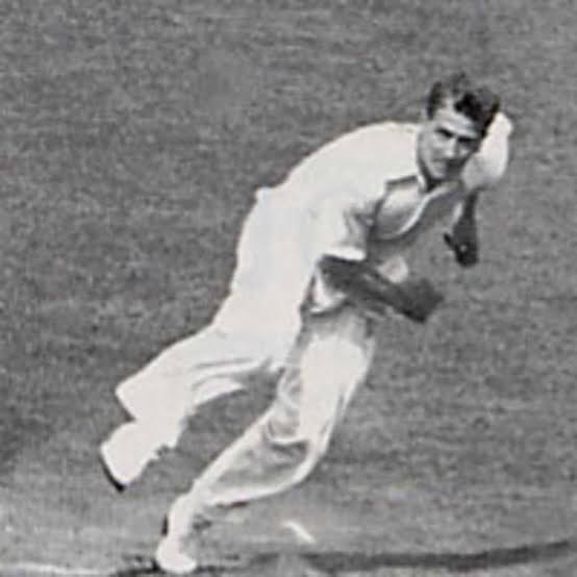
The great Nottinghamshire and England fast bowler, Harold Larwood, favoured the Radcliffe Road End at Trent Bridge.
Incidentally, the use of the word ‘tarmac’ for runways and the apron near airport terminals is a misnomer. Those surfaces are actually made of concrete.
Hooley largely missed out on the massive modern wealth generated by his invention, running out of substantial funds in later life. “The Hooleys never had much money,” was the wry observation of my ski-ing companion. “But I can afford another Calvados!” he said, visibly brightening.

.


Comments