WORLD XI

MY ALL-TIME TEAM
Shortly before he died in 2001, Don Bradman selected his All-Time World XI, to be revealed to the public only after his death. His choice stimulated much discussion and disagreement and laid itself open to an extreme Australian bias. When you see that seven of the eleven are Aussies, you sort of understood some of the controversy that swirled around his choice.
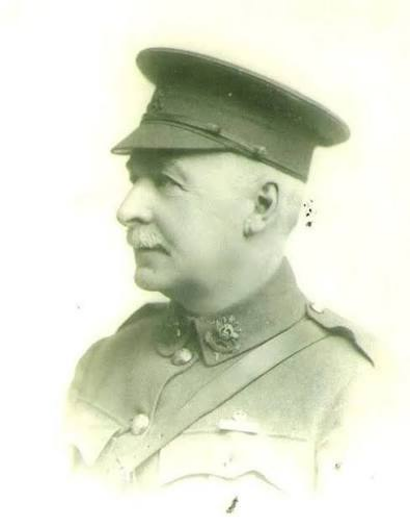
The Don
His team:
Barry Richards (SA), Arthur Morris (Aus), Don Bradman, capt. (Aus), Sachin Tendulkar (Ind), Garry Sobers (WI), Don Tallon, w-k (Aus), Ray Lindwall (Aus), Dennis Lillee (Aus), Alec Bedser (Eng), Bill O’Reilly (Aus), Clarrie Grimmett (Aus) 12th Man, Wally Hammond (Eng)
Only one Englishman! The great Hammond reduced to carrying the drinks! Only four batsmen, with Sobers the all-rounder, filling in as the fifth! And what a long tail, with Tallon coming in at No.6, who had a batting average of 17.13! Those Martian bowlers must have been licking their lips.
Of course, it’s a mug’s game picking a World XI. Nobody’s going to agree with you, and everyone will have his own opinions. Nonetheless, despite all the scorn coming our way, we all do it. Together with my brother, I’ve been picking mine since the age of about twelve. If only I could remember my team of the early Sixties and compare it to today’s choice. I’m pretty certain that Peter May was the captain, because he was a hero of mine, and being a Surrey lad, I wouldn’t have been at all surprised if Ken Barrington, John Edrich and Jim Laker, all Surrey men, didn’t make the cut as well.
First, I would contend that you must have a balanced team, that is, two openers plus three batsmen, an all-rounder, a wicket-keeper, three seamers and a spinner, or perhaps two spinners at the expense of one… well, I wouldn’t like to say. There is another argument that all Test-playing countries should be represented but I don’t hold with that ‘inclusivity’ claptrap. Pick the best players, regardless of their country of origin. Rest assured – my team will not include seven Aussies!
Here goes:
1. Jack Hobbs (England)
2. Barry Richards (South Africa)
3. Don Bradman capt. (Australia)
4. Wally Hammond (England)
5. George Headley (West Indies)
6. Graeme Pollock (South Africa)
7. Garry Sobers (West Indies)
8. Alan Knott w-k (England)
9. Shane Warne (Australia)
10. Malcolm Marshall (West Indies)
11. Sydney Barnes (England)
Hmm, I hear you mutter, no Indians, no Pakistanis, no New Zealanders, no Sri Lankans. What about Gavaskar, Tendulkar, Bedi from India, Imran Khan, Waqar, Wasim from Pakistan, Hadlee, Crowe from New Zealand and – controversially – no Muralitharan from Sri Lanka (I omit him, despite his world record of 800 Test wickets – the next on the list is Warne with 708 – because I have always believed that his action was questionable in the extreme)? Well, I did say my choice would be debatable.
Ans so to my justifications…
Not for nothing was Jack Hobbs known as ‘The Master’. By all contemporary accounts, he was the unquestioned master of all conditions, the best player by far on bad pitches (he was pretty useful on good pitches too!). For much of his international career (1908-1930) he was regarded as the undisputable best batsman in the world. In 61 Tests, he averaged 56.94, even though figures were of little interest to him. Significantly, though he amassed 199 First-Class centuries – the next on the all-time list of century-makers is Patsy Hendren with 170 - he rarely went on to score a double hundred. He believed he was an entertainer as much as a professional cricketer and liked to treat spectators to a few shots once he had reached treble figures. And how about this…. He scored 99 of those hundreds after the age of 40. His place in the side is not in dispute.

Jack Hobbs on his way to his 196th First-Class century in 1933, at the age of 50.
Less so perhaps my choice as his opening partner. There is a strong case for picking Herbert Sutcliffe. After all, together with Hobbs, he strode out at the top of the England batting order enough times, 38 in fact, with an average partnership of 87.81, including stands of over a hundred on 15 occasions. Sutcliffe’s Test match average of 60.73 provides a strong case for his inclusion but a reluctance to be accused of an England bias has prompted me to look to a player of a much later vintage to partner Hobbs. It was the confirmed opinion of all those who played with and against him that Barry Richards was the finest batsman they had ever seen. It was of course his greatest misfortune that he was confined to just four Test matches before South Africa’s isolation from international sport came into effect. But what an impact he made in those four matches, all against Australia in 1970, scoring 508 runs with an average of 72.57 (second only to Don Bradman, incidentally). Yet how can I champion his cause on the evidence of just four matches? Lest I be accused of Hampshire bias, let me remind you that Richards opened the batting for Bradman’s All-Time World XI. “There is no doubt,” said The Don, “that Richards was an all-time great. He could play spin and speed with equal ability. He was an exceptional talent, unfulfilled in Test history.” What’s good enough for Bradman is good enough for me.
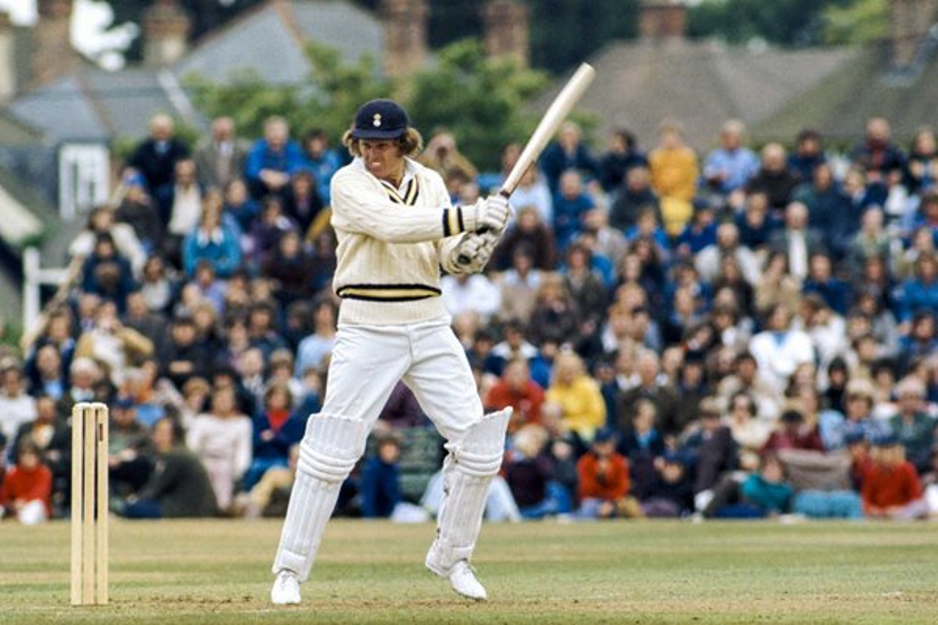
Barry Richards batting for Hampshire v Australia at Southampton 1975.
And that includes Bradman’s own place at No. 3 in the batting order. It was no gesture of arrogance to put himself there. Where on earth would he have batted other than at first down? Quite simply he is universally regarded as the greatest batsman of all time. A Test match average of 99.94 (next on the list is Richards with 72.59 – after only four Tests, do not forget – followed by Graeme Pollock with 60.97) bears irrefutable evidence to his pre-eminence. Wisden hailed Bradman as “the greatest phenomenon in the history of cricket, indeed in the history of all ball games.” Comparisons with anybody else are pointless. In all he went to the crease 80 times for Australia and scored 29 centuries. He needed to score only four in his last innings against England at the Oval in 1948 to average over 100 in Tests, but uncharacteristically he fell for a duck, which only added to his everlasting mystique. He picked the side and was entitled to bat where he liked but was there any justification for his making himself captain? Yes, I believe so. He captained Australia in 24 Tests (W15, D6, L3) and never lost a series, leading his team in four Ashes series victories, with one drawn, and thereby retaining the urn in 1938. As a leader he was committed to attacking, entertaining cricket and with all the gods of the game at his disposal, his tactics could hardly be anything else. He is my captain.

Bradman in the nets
Had it not been for Bradman, a convincing case could have been made for Wally Hammond as the best batsman in the world between the Wars. The comparison between the two irked Hammond. “Not only do I have to score a hundred,” he would complain to his team-mates, “but I have to score more than bloody Bradman!” Let us put aside for one moment his moody and difficult personality, a loner with few friends in cricket, and concentrate on the majesty of his batting. He was a dashing strokemaker, superbly stylish with his cover driving particularly memorable, off both back and front foot. He played in 85 Tests and had a batting average of 58.45, which included 22 centuries. He was a magnificent athlete who could bowl devastatingly fast spells – when he could be bothered. There were many who believed that he could have made himself into a genuine all-rounder, but as Bradman himself pointed out, “He was too busy making runs.” One can imagine his captain in this team attempting to persuade him to turn his arm over to break a stubborn stand. Whether Hammond would have listened is another matter.
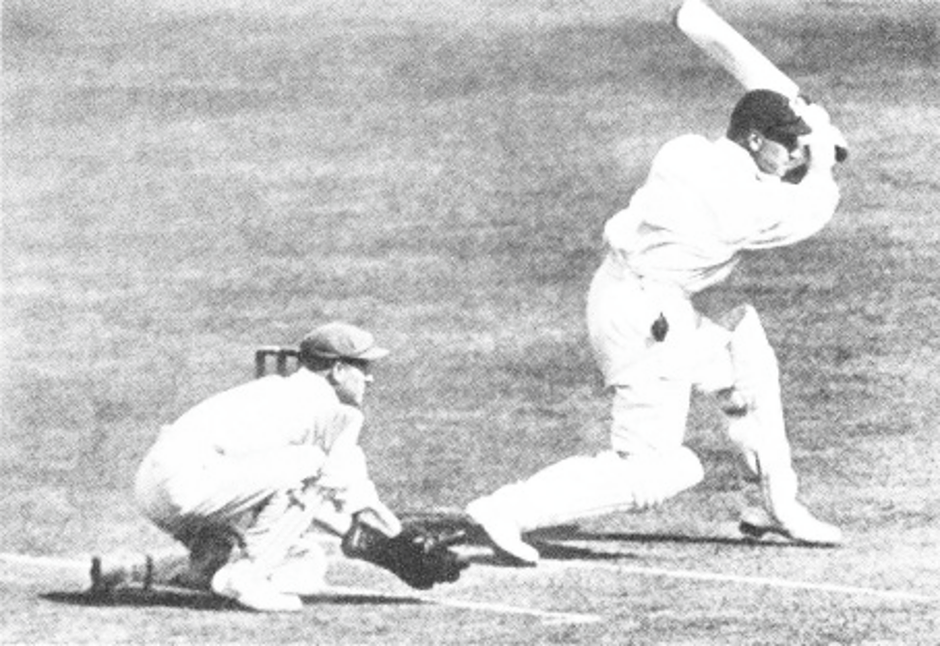
That cover drive! Hammond batting in Australia 1928-29.
Between the Wars, when West Indian batting was often vulnerable and impulsive, George Headley, almost single-handedly, carried the side with scoring feats that led him to be dubbed the Black Bradman. In 22 Tests, he scored 10 hundreds and finished up with an average of 60.83, a dominance which prompted his devoted followers rather mischievously to start calling Bradman the White Headley. A pardonable exaggeration but the moniker was a true reflection of his ability, many of his breathtaking innings holding together a West Indies side still making its way in international cricket.
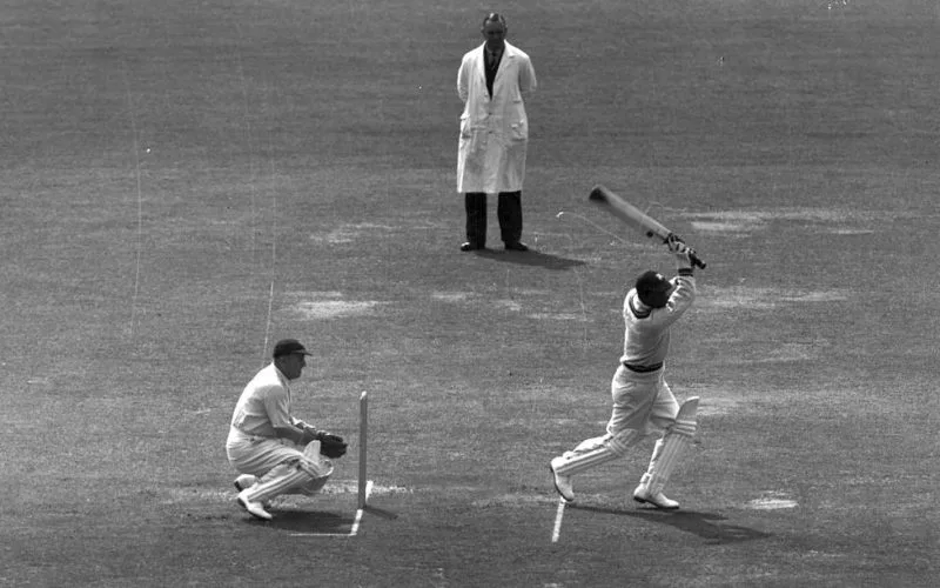
George Headley batting at Old Trafford against England in 1939.
Graham Pollock is another of the select band of cricketers who can lay claim to the label as the greatest batsman in the history of the game – bar Bradman. How about the greatest left-hander? Perhaps. Though the fellow coming in next in the order might have a word or two to say about that. Despite having his international career cut short when he was only 26, owing to South Africa’s sporting isolation, by averaging 60.87 in just 23 Tests, Pollock revealed an awesome talent, such that The Don described him, with the possible exception of Sobers, as the best left-hander he had ever seen play cricket. Pollock was an extremely powerful batsman, capable of hitting boundaries off good balls, on the up off the front foot or off the back foot if the ball was pitched fractionally short, always with the sweetest of timing. His appetite for runs was insatiable.

Pollock in action during South Africa’s tour of England in 1965.
Sobers. What more can be said of him? Suffice it to say that, together with Bradman, he would be first on the team sheet of everybody’s World XI. He was quite simply the greatest all-round cricketer the world has ever seen. A strong case could be made for his playing solely as a batsman (Test average of 57.78) but if he did, one of the six batsmen in front of him in the order would have had to make way for another bowler, because Sobers was of course a front-line bowler as well – dangerous left-arm quick, with orthodox or wrist spin, if he was in the mood. Good luck with that, gently informing one of Hobbs, Richards, Hammond, Headley or Pollock that he was to be 12th Man. Batting at No.7 might seem a little low for a batsman of such devastating strokeplay as Sobers, but quite often, he dropped himself down the order following a long spell of bowling. Tom Graveney used to say that he was quite content to watch from slip while Sobers compiled another large innings “because that meant he’d be too knackered to bowl!” Knackered or not, Sobers took 235 wickets in his 93 Tests.
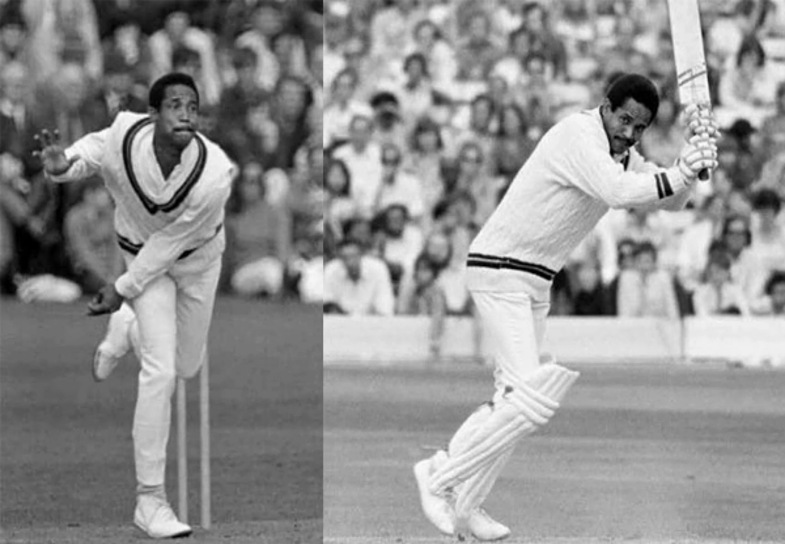
The great Sir Garry Sobers, supreme as a bowler and a batsman.
Who to keep wicket? I am a firm believer in the school of thought that you should always pick your best gloveman, irrespective of his ability with the bat. There are seven batsmen in this team with outstanding Test match records so runs ought not to be in short supply. And it’s not as if my choice, Alan Knott, couldn’t bat. He certainly could, as a Test average of 32.75 amply attests. As a wicket-keeper, he stands supreme. He was a natural gloveman, with soft hands, economy of movement and almost superhuman powers of conversation. Bradman may have favoured his countryman, Don Tallon, in his World XI but Wisden had no such qualms, naming Knott as their wicket-keeper in their All-Time Test XI.
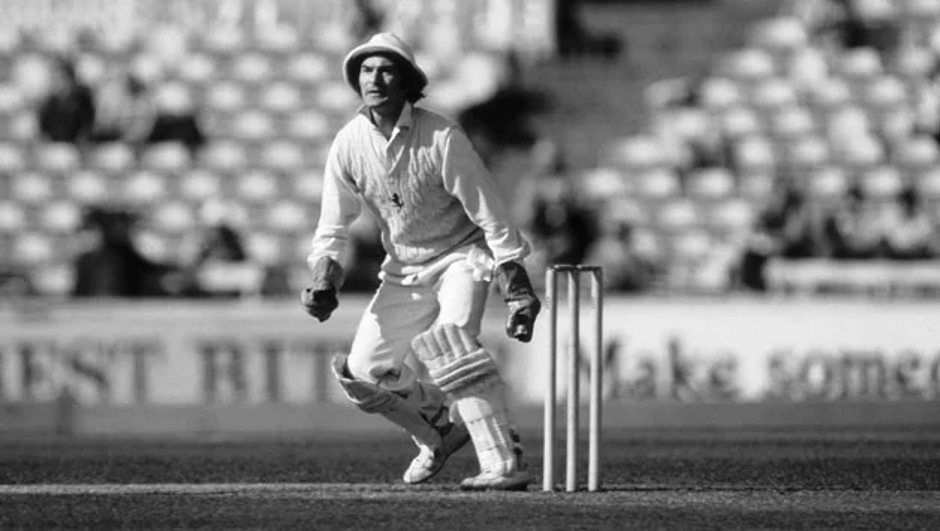
Alan Knott
The bowling attack has been less easy to assemble than my choice of batsmen. As Sobers is a three-in-one bowler (seam, left-arm orthodox and Chinamen and googlies) I have been able to pick six batsmen, which leaves space for a new ball partner for Sobers, a third seamer and a spinner.
There would be few quibbles with my selection of Shane Warne as the spinner. Almost single-handedly, he revolutionised the art of leg spin in an era when it was in danger of becoming a dying skill. In 145 Test appearances, he took 708 wickets, which remained a record until surpassed by the Sri Lankan, Muralitharan, in 2007 (he with the dodgy action). The secret of Warne’s success was his relentless accuracy – notoriously difficult to master as a wrist spinner – and his aggressive, attacking mindset. He was in addition a useful lower-order batsman, oddly enough having scored the most Test runs of any player without having passed three figures.

Shane Warne
So, who, from the long list of great fast bowlers in the game’s history, is going to take the new ball with Sobers? I am tempted to go with Larwood, on the evidence that none struck as much fear into the hearts of opposing batsmen as he, particularly in the infamous ‘Bodyline Series’ on 1932-33. The only other fast bowlers that I can think of who struck similar fear into batsmen’s hearts, scrambling their minds and their technique, was Frank Tyson in the Ashes series of 1954-55 and Jeff Thomson in the mid-1970s. Dennis Lillee, Thommo’s partner-in-crime, would state a convincing case for inclusion, not only because of his express speed, but also because, after back surgery, he remodelled his action and returned as a highly skilful practitioner with the ball while still maintaining much of his former pace. There are those who would contend that he was the most complete fast bowler, employing clever variations in pace, length and movement…and I would not disagree.
Eventually, after much deliberation, I have plumped for the West Indian, Malcolm Marshall (another Hampshire player, you will note, but there is no bias here – honest!). Worldwide, he was recognised as a fast bowler sans pareil. He had total mastery of the outswinger and inswinger, with a fast arm that elevated him to extreme pace. He had a wicked bouncer, which on account of his height (only 5 feet 9 inches) tended to skid onto unwary batsmen. His bowling average, 20.36 from 81 Tests, is the best of any cricketer who has taken 300 or more wickets (his final tally was 376). It is no surprise to learn that he is included in Wisden’s All-Time World XI, so I am in good company with my choice.
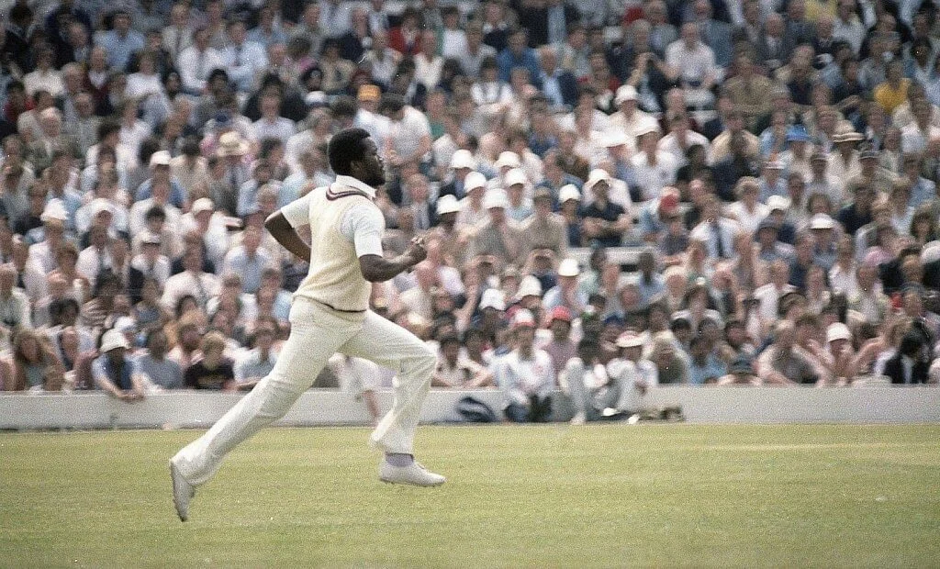
Malcolm Marshall
No.11 on the team sheet might come to some as a surprise (though his batting average of 8.06 would seem to underline he had found his rightful place in the batting order). Sydney Barnes. Who he? In only 27 Test matches for England, spanning the years 1901-1914, he took 189 wickets at a scarcely believable average of 16.43, one of the lowest averages ever achieved. Unusually, he only played in total two years of county cricket, which limited his availability for England, preferring to ply his trade in the Staffordshire and Lancashire leagues, where he believed he could make more money (and in this he was probably right). Over six feet tall, he bowled in-swing, out-swing, off and leg cutters at a lively pace, getting the ball to lift sometimes alarmingly. He could drop his pace and bowl a mixture of off and leg spin, and this allied to an aggressive and hostile temperament and enormous stamina, made him a handful even on the hard and true wickets in Australia. On uncovered wickets in England and on the matting in South Africa, he was often unplayable. Among contemporaries, he was regarded without exception as the greatest bowler of his era.
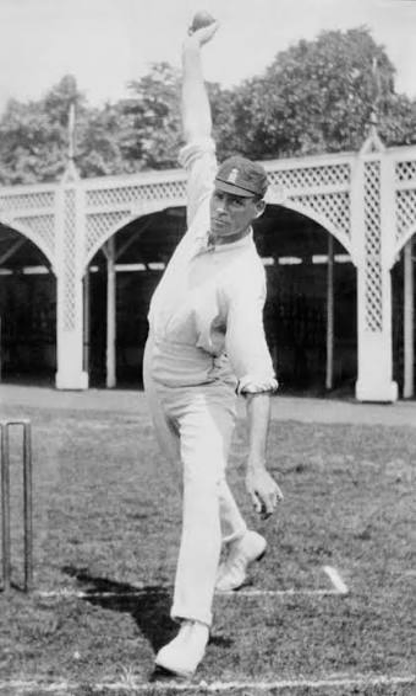
Sydney Barnes
12th Man: Colin Bland
Every team needs a 12th Man to come on as a substitute in the event of one of the team succumbing to injury. It makes sense therefore to engage the services of the best fielder at your disposal. Even today, in an era of vastly improved standards in fielding, with several outstanding practitioners of the craft, Colin Bland, who played for South Africa between 1961 and 1966, is regarded as one of the greatest, if not the greatest, fielder in the history of Test cricket. And should one of the team fall ill on the eve of the match or sustain an injury during the warm-up such that the 12th Man had to be drafted in at the eleventh hour, it should not be forgotten that Bland was pretty handy with the bat too, as his Test average of a smidgen under 50 amply affirms.
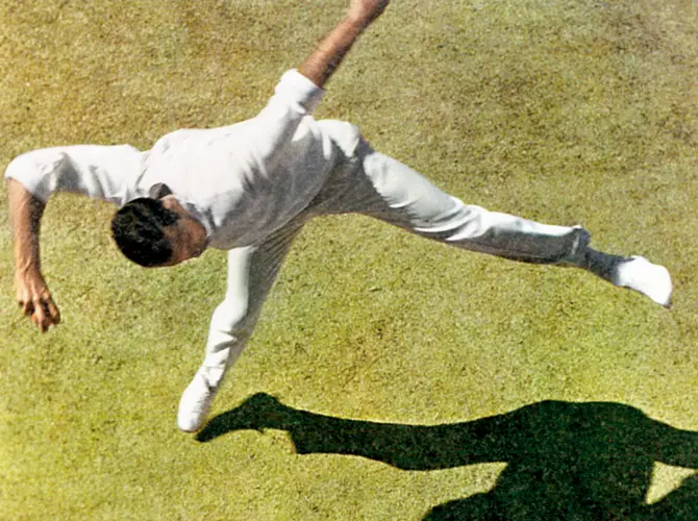
Colin Bland…What balance! What athleticism!
If one of the team withdrew for whatever reason (Hammond because he wasn’t asked to captain, whereas his nemesis Bradman had, for example, or Barnes walking off in a huff because he believed he wasn’t being paid enough – you can easily imagine both scenarios), who would be my replacement? As a batsman…. Sachin Tendulkar. Bradman said when watching the Indian bat that he reminded him very much of himself. As a fast bowler…. Dennis Lillee, for reasons already stated. As a spinner…. probably Jim Laker in England or Bill O’Reilly overseas. On Mars? I have no idea what the wickets are like.


Comments