ILL-ADVISED COMEBACKS


Serena Williams, Wimbledon champion in 2000, 2002, 2008, 2009, 2012, 2016
I cannot have been alone at raising a quizzical eyebrow at the news that Serena Williams, the 23-time Grand Slam singles champion, was intending to make a comeback at this year’s Wimbledon. In the event, it was a short-lived reunion with grass court tennis. She was defeated in the first round by the 20-year-old Australian, Maya Joint, and the scheduled reunion with her sister Venus in the doubles never took place as she picked up a knee injury in that singles match and the pair were forced to withdraw.
My immediate response when I heard of Serena’s proposed comeback at the age of 44 was…why? She had retired four years ago, with her reputation as arguably the greatest female tennis player secure and undisputed. Did she still have unfinished business? Unlikely, with 23 Grand Slams to her credit, and an estimated $400 million dollars in the bank. Did she miss playing, the smell of the greasepaint, the roar of the crowd? A picture of her bandaged knee and four syringes full of fluid that had been drawn from the knee would suggest that that longing for one last hurrah had come at a high physical price. There were glimpses of the old Serana in that match against Joint, but she was moving more slowly, her footwork looked rusty and her aura of invincibility sadly diminished. It was a strange one.

Pictures of Serana Williams having treatment following her defeat in the first round of this year’s Wimbledon, with four syringes filled with fluid taken from her injured knee.
After defeating Leon Spinks in 1978, Muhammad Ali, another who could lay claim to be the greatest in his sport, announced his retirement from boxing. It did not last. In 1980, driven by a shortage of money, he returned to the ring to fight Larry Holmes in a bid to win the heavyweight championship of the world for an unprecedented fourth time. It was an ill-advised decision. He was but a shadow of his former self and by the 10th round, his trainer, Angelo Dundee, entered the ring and threw in the towel. It had been a pitiable display, a fight that was said to have contributed to the early onset of Parkinson’s Disease, which crippled the former champion for the rest of his life.

Muhammad Ali in his pomp, standing over the defeated Sonny Liston in 1965.

In 1980 it was a completely different story. In the 10th round of his fight against Larry Holmes, Ali’s trainer threw in the towel after what had been a pitiable display by the former champion.
In 1986, Diego Maradona had taken the World Cup by storm. Following the notorious Hand of God punched goal against England, just four minutes later he then scored one of the greatest goals of all time, dribbling past five English outfield players before putting goalkeeper Peter Shilton on his backside with a feint to slot the ball home. He continued to light up the tournament, winning the Golden Ball as the best player of the competition and was widely regarded to have won the cup for Argentina single-handed.

The infamous Hand of God goal scored by Diego Maradona against England in the 1986 World Cup.
Eight years later, it was a completely different story. Beleaguered, corpulent and clearly unfit, he was persuaded to turn out for his country for one last throw of the dice. Following a second-round victory against Nigeria, Maradona was selected for a random drugs test which to nobody’s surprise he failed and was sent home in disgrace. The astonishing thing was not that Maradona had been caught using drugs but that, given his history of convictions for using drugs whilst he had been playing in Italy, he was even allowed to play in the World Cup in the first place.

Maradona is led away for his random drugs test in the 1992 World Cup. To nobody’s surprise he failed and was sent home in disgrace.
But the story of quite possibly the saddest and most dismal of misguided comebacks was told to me by Tom Graveney when I was writing his biography. Had it not been for Don Bradman, the Englishman Wally Hammond could justifiably have considered himself to be the greatest batsman in the world between the Wars. Far from taking pleasure at being mentioned in the same breath as Bradman, Hammond deeply resented the comparison. “Not only do I have to do well,” he privately complained, “but I also have to score more runs than Bradman.”

Hammond at his imperious best in Australia 1928-29.
Who knows how many more runs Hammond would have scored, how many more wickets he would have taken and how many more (effortless) catches he would have taken at slip had not the Second World War intervened in his career. It is a futile question. The same might have been said of Jack Hobbs had he not lost his prime years to the First World War, to say nothing of the years lost to Hammond’s nemesis, Don Bradman, a near contemporary. On the resumption of county cricket in 1946, Hammond topped the national averages for the eighth time in succession, and it was inevitable that he was asked to lead the MCC touring party to Australia in 1946-47. He shouldn’t have gone. Exhausted by war and much depleted in experienced campaigners, the England side were comprehensively beaten 3-0, with Hammond’s form and health steadily deteriorating. On his return to England, he announced his retirement from all cricket at the age of 44.

Hammond was persuaded to come out of retirement to play for his county Gloucestershire against Somerset in 1951at the age of 48.
And that should have been that. Except it wasn’t. By 1951, Gloucestershire, never a wealthy county, were in the doldrums. Membership was ebbing fast, attendances were down and there was real concern that the players might not be paid. A home match against Somerset was scheduled for the Bank Holiday Monday in August. Some bright spark on the committee came up with the idea that the gate would be swelled if Hammond could be persuaded to come out of retirement to play. Astonishingly, he agreed. His last appearance at Bristol, Gloucestershire’s home ground, had come exactly five years earlier, when he had scored 214.
As expected, once the news had become public, the crowds flocked to catch one last glimpse of their hero; the match was a sell-out. Gloucestershire batted first and it was halfway through the day before the first wicket fell; Arthur Milton and George Emmett both scored hundreds. Then two wickets fell in quick succession and Hammond emerged from the pavilion to join Milton. The crowd rose as one and cheered him all the way to the wicket.
But as Hammond’s biographer, David Foot, wrote in his book: “There was no longer any majesty in his walk to the crease. The flannels were as immaculate as ever, but the limbs were weary, and it couldn’t be hidden.” From the moment he faced his first ball, surviving an appeal for LBW, it was clear that the comeback had been a terrible mistake. He could barely lay bat on ball and it took him 18 minutes to get off the mark. His timing had deserted him and when he did connect, the ball went nowhere. He was nearly run out. Milton called him for an easy single, but he was so slow that he would never have made his ground had the throw not been so wayward. Graveney told me that it was such awful viewing for his team-mates back in the dressing room that many of them couldn’t bear to watch. “It would have been a kindness if he had been run out,” Graveney said.

The moment when Hammond should have been run out. It would have been merciful if he had.
After 50 minutes of slow torture, Hammond was eventually bowled. He had managed only seven singles. On the Monday, he stood at slip for a while and then retired with lumbago. “It was the saddest episode in my career,” Graveney admitted, “We kept on asking ourselves back in the dressing room, why, Wally, why, as he dabbed away and missed.”
“What did they expect?” Hammond later complained, “Not a hundred from me as well.”
“Come.
Let’s have one other gaudy night. Call to me
All my sad captains. Fill our bowls once more.
Let’s mock the midnight bell.” Antony in Antony and Cleopatra (William Shakespeare)
Even Antony knew when the game was up.


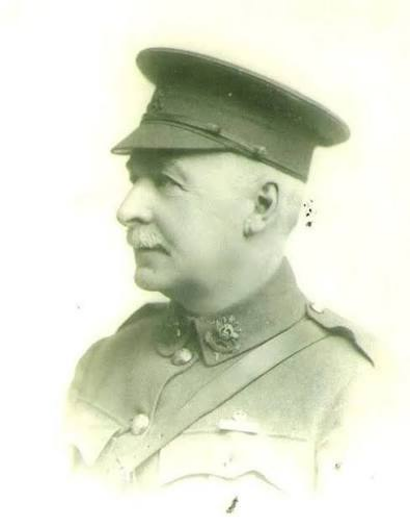
The examples of failed comebacks in sport show how difficult it can be for even the greatest athletes to accept when their physical abilities are no longer what they once were. Serena Williams, Muhammad Ali and Wally Hammond all had extraordinary careers, but their later returns demonstrate that reputation and past achievements cannot always overcome age, injuries and declining form.
Hammond’s story is probably the saddest because the huge crowd came to see a legend one final time, only to witness how much he had declined. It raises an interesting question about whether great athletes should return for one last appearance or leave their careers at their highest point. For fans who enjoy sports and online gaming entertainment, crazy time…